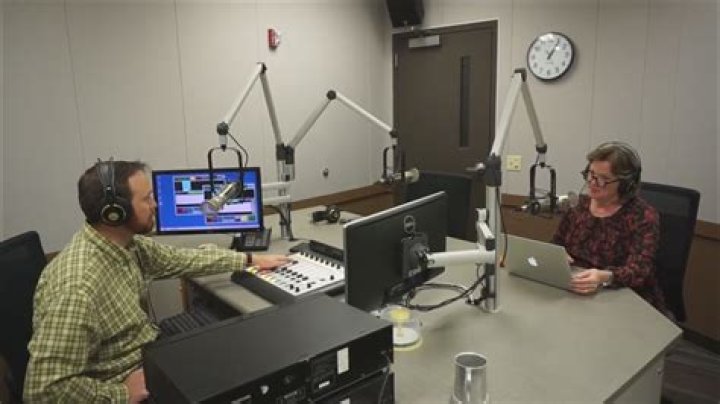
WVIK, the Quad Cities NPR station, is planning to move all its classical music programming to its secondary station starting this fall.
The 42-year-old station at Augustana College, Rock Island, broadcasts at 90.3 FM, mixing the news/talk format with classical music three times a day, sometimes more on the weekends. WVIK has made the decision to separate the two formats, putting news/talk onto 90.3 FM and its HD1 signal while launching a 24/7 classical music format on its HD2 signal at 105.7 FM (which started in late 2019).
“It is true we intend to change where and when you can hear our programming, but we will still be producing and broadcasting both the News/Talk format and the Classical Music format,” the station says in an FAQ on wvik.org. “What we are doing is separating the two formats which have traditionally been combined on our one signal. We are, in effect, doubling our service to the Quad Cities.”
“The coverage area of the HD1 and HD2 are identical. If you live outside of the Quad Cities metro, you may need to invest in an HD radio to receive HD2,” WVIK says. “HD radios are widely available online and being installed in more and more new cars all the time. You may already have one and not even realize it. If the time comes for this change and you are unable to get your hands on an HD radio, please let us know and we will help you with this process.”
WVIK also understands that many listeners without HD radios might never discover the new service. This is why it’s invested thousands of dollars into a second FM frequency in the QC — currently broadcasting from the Black Hawk College campus at 105.7 FM, on analog. It will be available at 90.3 FM HD2 for digital radios.
“WVIK is currently exploring options for improving this signal,” the site says of the analog signal. “So even if you have difficulty with 105.7 FM right now, there is a good chance this will change before our programming changes.”
WVIK is a public service of Augustana College, but the private school does not spend any annual operational funds on the station. Prior to 2015, it was not uncommon for Augustana College to cover any deficits run by WVIK. This has not happened since 2015.
“As with many small local non-profits, WVIK has funds in reserve that grow or shrink based upon each year’s operational expenses and fundraising success. In the most recent two years, these reserves have actually grown, not shrunk,” the station says. “However, the overall trend is indeed downward, which is one of the factors contributing to this move.
“If we do nothing, the reserves very well may run out in the coming years. This move is increasing the chances of WVIK being here long into the future. This change is ultimately about preserving this beloved institution – both its classical music and its local news.”
“WVIK remains as committed today to both local news and classical music in the Quad Cities as it was when it went on the air in 1980,” it says. “One only has to look at the myriad of ongoing partnerships we have in the arts community, the on air broadcasts of local orchestras and music ensembles that have included the additions of QCSO chamber music concerts, the Quad City Wind Ensembles, and more; the expansions of interviews being brought on air during Mindy Heusel’s afternoon program Perspective; thousands of dollars in investment to our ever growing music library; and the launch of Carolyn Martin’s Talking Art podcast, also heard during Morning Edition.
“We don’t have plans to end any of these things, or our locally hosted classical music programs. In fact, we hope to become an even stronger advocate for the arts when we launch a 24/7 Classical Music station, not just playing locally hosted music, but sharing news about the entire arts community,” the site says. “The hundreds of thousands of dollars that will be spent on this new 24/7 music station as we build it will demonstrate our substantial commitment to classical music and the arts in the Quad Cities.”
A greater formula for success
Classical music will move to WVIK 90.3 HD2, a 50,000-watt signal, which requires an HD radio to receive it, WVIK general manager Jay Pearce said Tuesday. “That’s that’s the big difference. But for the convenience of those who live in the Quad Cities, it will be available on analog, because I know not everybody has an HD radio.
“You might have one in your car and not know it,” he said. “A lot of cars have them and Toyota is putting them in all of their new models now. But for the convenience of those who just listen on a regular old analog radio and don’t listen online or on the phone on their app or anything like that, you’ll be able to receive it at this lower-power frequency and we’re investing quite a bit of money and making it available in analog to the Quad Cities area, where 80% of our listeners are.”
They decided to make the switch because listening habits have changed over the years and the audience for classical music has been flat, Pearce said.
“It hasn’t grown; it’s aging, the listening audience on terrestrial radio for classical music,” he said. “So the problem with that is, that the news/talk audiences for public radio have been growing and attract a somewhat younger listener. Younger, but not young enough that they’re not using terrestrial radios and very much younger audiences are listening online and on their phones.”
The plan is to put the news and talk on the 90.3 HD1 signal, to attract a bigger audience, Pearce said.
“When we do that, we increase the odds that we will increase listener donations, which are really critical to our operation,” he said. “It’s not a surprise that WVIK hasn’t exactly been running surplus budgets. So we have to solve that problem going forward and so that’s part of it.
“But this also gives us the opportunity to continue to invest in classical music and arts programming by creating this new channel,” Pearce said. “When we increase our revenue by attracting more audience with the news and talk on 90.3 on a regional basis, and there is evidence that’s desired. If you look at areas outside of the Quad Cities, we have more news and talk listeners than we do classical. By doing this, we hope to raise more money to invest in the classical product in the Quad Cities.”
Traditionally, WVIK has offered a wide variety, but as listening habits change, it makes more sense to dedicate a channel to one genre of programs, he said.
“The more successful way to do it is to dedicate a channel, to consistently the same format,” Pearce said. “When we do the news/talk, people will get the news/talk 24/7 with some music here and there. But on the classical channel then, we’ll do what classical listeners really want — that is to have classical music whenever they turn the radio on, not interrupted by three-hour blocks of news. We’ll be giving classical music listeners more of what they’re tuning in to hear.”
That what has proven today to be a formula for greater success, he said.
The news/talk format will move much of the national programming on the HD2 channel now, as well as Don Wooten’s “Saturday Morning Live,” WQPT’s “The Cities,” and the Saturday night jazz and big band programs.
“We would like to do more local programs,” Pearce said, noting the station plans to hire new classical music hosts.
Since 35-year veteran Dave Garner (who hosted “Morning Classics” weekdays) left WVIK in February, the station has run the syndicated Peter Van De Graff classical program weekdays, and Michael Wahlmann is hosting on Fridays.
More staff changes coming
WVIK is looking to hire a new development director and a community engagement director. Jared Johnson — who previously held those positions — was promoted to station manager in January. Over the past four years, Johnson has helped to raise $366,000 toward WVIK’s ongoing Campaign for the Future, an initiative aimed at increasing digital services and the launching WVIK’s second broadcast signal in the QC (105.7 FM).
Pearce plans to retire as CEO and general manager in December, and it will be up to Augustana to decide what happens to that role.
WVIK has increased listener donations in recent years, but it’s from fewer donors giving more, he said.
“We need to change that,” Pearce said, noting federal and state support have not increased. Underwriting has been adversely affected by the pandemic, and they hope to get more local support.
“We’ve had a couple good years, because of pandemic relief — stimulus money and payroll protection,” he said. “We run deficits every year, unless someone gives us an unexpected gift or bequest. That’s not a great way to sustain yourself, because you can’t count on that. It’s like buying a lottery ticket and calling it your retirement plan. We need to do something that will give us a more solid source of financing.”
A first 24/7 classical station
The most exciting thing for Pearce is WVIK building its first 24/7 classical music station.
“That to me is more important to me,” he said. “It will be online. That’s where growth in listening is growing.”
Staff is participating in a a Poytner Institute digital training. “We’re spending hours per week, learning all about digital presence, how to use it.”
They hope to reach out to the QC arts community, and attract more people using digital means. A big part of that is connecting to younger audiences, Pearce said. “Meet them where they are — and they’re not tuning into 90.3 FM.”
Augustana provides in-kind services for the station (accounting, IT, and human resources), but has decided not to cover operating deficits — instead devoting funds directly for students, Pearce said.
“It’s not that they don’t support us; there’s just no line item in the budget,” he said. WVIK’s reserves fluctuate, currently about $300,000 or more.
“We’re gonna have to pay the piper eventually, and if we want to robust classical music station and a robust news operation to continue beyond the next three o five years, we’re gonna have to do something,” Pearce said.
The analog rebroadcasting of the HD2 signal is on an antenna at Black Hawk College, Moline. WVIK plans to upgrade that. In about three weeks, they may move the antenna to another location, more centrally located in the QC, Pearce said.
The format change is planned for this fall, he said.
“I miss the five and dime too, but there are no five and dimes left,” Pearce said of facing changes. “We’re in an online world; we’re in a rapidly changing landscape, and o hold on to he Woolworth model just ain’t gonna happen. It ain’t gonna work.”