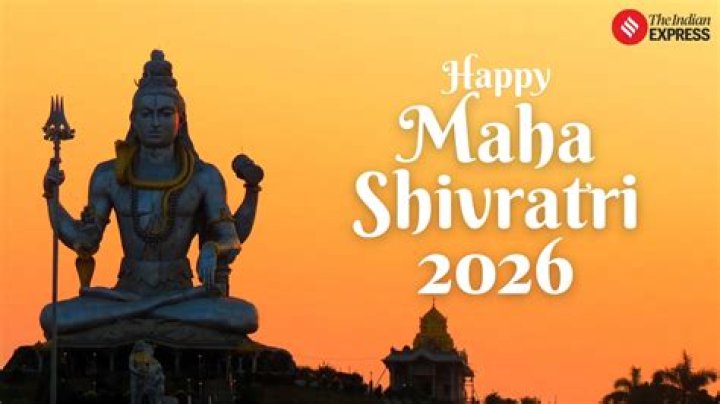
Maha Shivratri is a major Hindu festival that celebrates the union of Goddess Parvati with Lord Shiva. In other words, it is the coming together of knowledge and energy. Falling on 26 February 2024, the occasion is always celebrated with vigor across the country as devotees chant mantras and seek the blessing of Shiva by fasting.
Maha Shivratri 2024 Date & Puja Muhurat
Duration - Duration - 00 Hours 49 Mins Chaturdashi Tithi Begins - 09:57 PM on Mar 08, 2024 Chaturdashi Tithi Ends - 06:17 PM on Mar 09, 2024 Duration - Duration - 00 Hours 49 Mins Chaturdashi Tithi Begins - 11:08 AM on Feb 26, 2025 Chaturdashi Tithi Ends - 08:54 AM on Feb 27, 2025 Duration - Duration - 00 Hours 50 Mins Chaturdashi Tithi Begins - 05:04 PM on Feb 15, 2026 Chaturdashi Tithi Ends - 05:34 PM on Feb 16, 2026 Duration - Duration - 00 Hours 49 Mins Chaturdashi Tithi Begins - 12:03 PM on Mar 06, 2027 Chaturdashi Tithi Ends - 01:46 PM on Mar 07, 2027 Duration - Duration - 00 Hours 50 Mins Chaturdashi Tithi Begins - 10:44 AM on Feb 23, 2028 Chaturdashi Tithi Ends - 01:26 PM on Feb 24, 2028 Duration - Duration - 00 Hours 51 Mins Chaturdashi Tithi Begins - 01:29 PM on Feb 11, 2029 Chaturdashi Tithi Ends - 02:34 PM on Feb 12, 2029 Duration - Duration - 00 Hours 49 Mins Chaturdashi Tithi Begins - 12:22 PM on Mar 02, 2030 Chaturdashi Tithi Ends - 12:01 PM on Mar 03, 2030 Duration - Duration - 00 Hours 50 Mins Chaturdashi Tithi Begins - 02:44 AM on Feb 20, 2031 Chaturdashi Tithi Ends - 11:54 PM on Feb 20, 2031 Duration - Duration - 00 Hours 48 Mins Chaturdashi Tithi Begins - 04:51 AM on Mar 10, 2032 Chaturdashi Tithi Ends - 01:18 AM on Mar 11, 2032 Maha Shivaratri Muhurat
Maha Shivaratri Muhurat
Maha Shivaratri - Friday, March 8, 2024Nishita Kaal Puja Time - 12:13 AM to 01:01 AM, Mar 09
Ratri First Prahar Puja Time - 06:33 PM to 09:35 PM Ratri Second Prahar Puja Time - 09:35 PM to 12:37 AM, Mar 09 Ratri Third Prahar Puja Time - 12:37 AM to 03:39 AM, Mar 09 Ratri Fourth Prahar Puja Time - 03:39 AM to 06:41 AM, Mar 09
Ratri First Prahar Puja Time - 06:29 PM to 09:34 PM Ratri Second Prahar Puja Time - 09:34 PM to 12:39 AM, Feb 27 Ratri Third Prahar Puja Time - 12:39 AM to 03:45 AM, Feb 27 Ratri Fourth Prahar Puja Time - 03:45 AM to 06:50 AM, Feb 27
Ratri First Prahar Puja Time - 06:23 PM to 09:32 PM Ratri Second Prahar Puja Time - 09:32 PM to 12:41 AM, Feb 16 Ratri Third Prahar Puja Time - 12:41 AM to 03:50 AM, Feb 16 Ratri Fourth Prahar Puja Time - 03:50 AM to 06:59 AM, Feb 16
Ratri First Prahar Puja Time - 06:32 PM to 09:35 PM Ratri Second Prahar Puja Time - 09:35 PM to 12:38 AM, Mar 07 Ratri Third Prahar Puja Time - 12:38 AM to 03:41 AM, Mar 07 Ratri Fourth Prahar Puja Time - 03:41 AM to 06:44 AM, Mar 07
Ratri First Prahar Puja Time - 06:27 PM to 09:33 PM Ratri Second Prahar Puja Time - 09:33 PM to 12:40 AM, Feb 24 Ratri Third Prahar Puja Time - 12:40 AM to 03:47 AM, Feb 24 Ratri Fourth Prahar Puja Time - 03:47 AM to 06:53 AM, Feb 24
Ratri First Prahar Puja Time - 06:21 PM to 09:31 PM Ratri Second Prahar Puja Time - 09:31 PM to 12:41 AM, Feb 12 Ratri Third Prahar Puja Time - 12:41 AM to 03:51 AM, Feb 12 Ratri Fourth Prahar Puja Time - 03:51 AM to 07:01 AM, Feb 12
Ratri First Prahar Puja Time - 06:30 PM to 09:35 PM Ratri Second Prahar Puja Time - 09:35 PM to 12:39 AM, Mar 03 Ratri Third Prahar Puja Time - 12:39 AM to 03:43 AM, Mar 03 Ratri Fourth Prahar Puja Time - 03:43 AM to 06:47 AM, Mar 03
Ratri First Prahar Puja Time - 06:25 PM to 09:33 PM Ratri Second Prahar Puja Time - 09:33 PM to 12:40 AM, Feb 21 Ratri Third Prahar Puja Time - 12:40 AM to 03:48 AM, Feb 21 Ratri Fourth Prahar Puja Time - 03:48 AM to 06:55 AM, Feb 21
Ratri First Prahar Puja Time - 06:34 PM to 09:35 PM Ratri Second Prahar Puja Time - 09:35 PM to 12:37 AM, Mar 11 Ratri Third Prahar Puja Time - 12:37 AM to 03:38 AM, Mar 11 Ratri Fourth Prahar Puja Time - 03:38 AM to 06:39 AM, Mar 11
All About the Maha Shivratri Festival
This festival holds a deep meaning for all the devotees of Lord Shiva, the god of destruction. Half of the lunar month that is clad in darkness holds a special meaning to the God. Shivratri is celebrated every month. However, this becomes even more symbolic when it falls in the month of Magha or Phalguna as per the panchang or Hindu calendar. This marks the onset of the summer months. The day is particularly rejoiced by the devotees as they fast and pay reverence to the lingam which is a symbol of Shiva. Maha Shivratri literally translates to “the great night of Lord Shiva.” It is on this night that the lord performs tandava as per the legends. Festivities, fairs, and celebrations mark the day on one of the biggest festivals of the Hindus.
Significance of Maha Sivratri 2024
This day holds different meanings for different individuals. To those who are on the path of spirituality, this festival holds special importance. On the other hand, those who are involved in the grihastha phase of their lives also find reasons to celebrate this day for Siva’s victory over all his enemies. The festival’s celebrations also acknowledge the fact that it is Shiva’s wedding anniversary to the incarnation of Shakti, goddess Parvati. People rejoice the day by observing fasts for a powerful marriage like theirs.
For the ascetics, however, this is the day that he became a yogi, amalgamating with Mount Kailash, becoming stoic like the majestic peak. He became the Adi Guru, the first guru of the yogis on this day. This is why the day holds so much relevance for the ascetics who see it as the great night of observing stillness.
Maha Shivratri Puja Vidhi
The auspicious puja of this day is performed during the Nishtita Kaal. Those performing the rituals must take a bath and adorn clean clothes followed by performing the below-mentioned vidhi to seek the blessings of the lord:
Sit in a peaceful place and meditate to align yourself with the high power.
Place the idol of Lord Shiva or the Shiva lingam on a wooden platform or chowki.
Cover it with a fresh white cloth.
Light an oil lamp to the right of the chowki.
Begin the puja by sprinkling some water on the feet of the lord.
Offer an arghya to the idol.
Perform achamana which is pouring water in the palm of your right hand and consuming it.
Perform an abhishek of the idol using Ganga Jal, milk, curd, and honey.
Cover the idol in clean white clothes.
Offer a kalava or sacred thread to the idol.
Offer a janeu and some akshat to the idol.
Smear some sandalwood paste and perfume on the idol.
Offer dhatura, bel patra, fruits, and flowers to the idol.
Light incense sticks or dhoop.
Offer bhog or Naivedhya that is prepared using a satvic recipe to the lord.
Perform parikrama starting by turning to your left.
Perform the puja aarti and end by performing pushpanjali.
Rituals Associated with Mahashivratri Celebration
Different rituals are performed while celebrating the festival that symbolizes the union of Shiva and Parvati. Let us take a look at some of the major rituals associated with the festivities:
Young and old alike observe a fast for the whole day. Women pray for the longevity of their husband’s life while unmarried women pray for an ideal husband like Shiva.
The famous temple of Kaashi Vishwanath sees thousands of devotees visiting to seek the blessings of the lord and perform jal (water) abhishek and dudh (milk) abhishek on the shiva lingam.
Thousands of devotees take a dip in the holy waters of Ganga to purify their mind, body as well as the soul.
Bel patra and dhatura are considered to be the favorite of Lord Shiva. So, devotees offer these in great numbers at the temples.
Lord Shiva is the symbol of knowledge, hygiene, and penance. To mark this, devotees put three horizontal lines on their foreheads.
Many believe that the Rudraksha tree was born out of the tears of Lord Shiva. So, devotees make offerings to the tree to honor him.
How is Maha Shivratri celebrated in different parts of the country?
Being the biggest festival for the devotees of Shiva, Maha Shivratri 2024 date is celebrated with fervor in different parts of the country. Let us have a look at how some of the prominent states in the country celebrate this day:
Madhya Pradesh: Devotees line up to take a bath in the famous Shiv Sagar tank in the Khajuraho region of Madhya Pradesh on this day. Similarly, the Matangeshwar Temple in Bundelkhand sees a huge crowd of worshippers on this day.
Karnataka: Sri Shidlingappa′s “Mela” is organized on this auspicious day. It is a marker of festivities in the state of Karnataka. On this day, the idol of the Lord is taken in a palanquin to the river by the devotees.
West Bengal: Devotees make four shiva lingams out of the sand and each is bathed with milk, curd, ghee, and honey respectively.
Himachal Pradesh: On this day, a Shobha Yatra is organized by the state and its royal family. The famous Bhutnath temple in Mandi holds the biggest Shivaratri Puja in the nation. An eight-day-long fair is also organized to mark the festivities.
Jammu and Kashmir: Spread over a period of 21 days, this festival is celebrated by taking two pots and filling them up with pecan nuts and water. Each pot represents Goddess Parvati and Lord Shiva. On the third day, the contents of the pots are taken out and distributed as prasad.
Astrological Significance of Celebrating Shivratri
The festival celebrating Lord Shiva falls on the fourteenth day of Krishna paksha Chaturdashi, which is also considered to be a dark fortnight. According to the science of astrology, Shiva is also the lord of the Chaturdashi tithi. As a result, this day has a lot of astrological significance because according to the mystical sciences, the moon has a great impact on our minds. On the day of the festival, the impact exerted by the moon is fairly weaker. As a result, by worshipping Lord Shiva one can strengthen the influence of the moon in their birth chart. This is due to the fact that Lord Shiva adorns the moon on his forehead as per Hindu mythology. Consequently, worshipping Shiva on this day boosts one’s mental strength, endurance, willpower, and courage.
Legends Associated with Lord Shiva Maha Shivratri
According to Maha Shivratri story, Lord Brahma and Vishnu fought to prove their supremacy over the other. To resolve the dispute between the creator and the preserver, Lord Shiva appeared as a beam of light, asking the two to find its beginning and end. The one who is able to do so, declared Shiva, will be the supreme god. The two gods agreed and while Lord Brahma transformed into a swan to fly upwards to find the source of light, Lord Vishnu turned himself into a bug to dig deeper into the Earth. Eventually, Lord Vishnu accepted defeat but Lord Brahma concocted a lie to win the dispute. Angered by his actions, Lord Shiva cut off one of his five heads, symbolizing the eradication of falsehood on this day.
People around the country get together on this auspicious day to celebrate a happy Mahashivratri by dipping in the holy waters and absolving their sins. They celebrate the inevitable truth and seek courage and bravery to get through life’s many struggles on this day.
Get connected with Astroyogi astrologers if you wish to know more about this occasion!