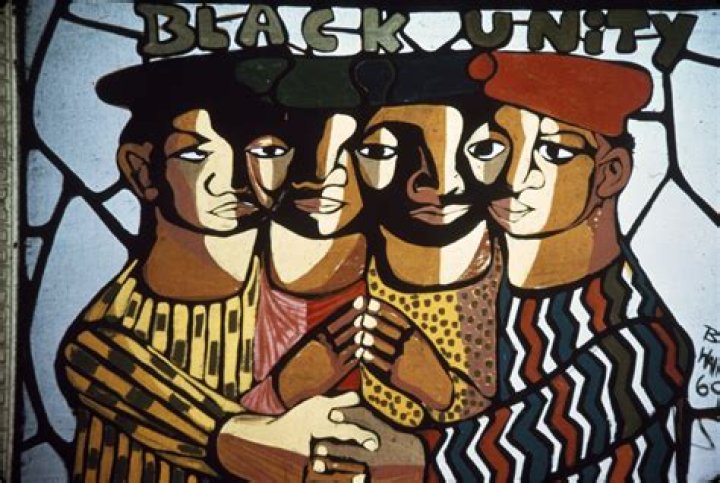
“I’m tired of being desensitized to the murder of black men. I don’t give a fuck if it’s by police or peers. This shit is not normal.”
J. Cole
By Bailey Shevenell
“Be Free” Lyrics:
And I’m in denialAnd it don’t take no x-ray to see right through my smileI know, I’d be on the goAnd it ain’t no drink out there that can numb my soulNo, noAll we want to do is take the chains offAll we want to do is break the chains offAll we want to do is be freeAll we want to do is be freeAll we want to do is take the chains offAll we want to do is break the chains offAll we want to do is be freeAll we want to do is be freeCan you tell me why every time I step outsideI see my niggas die,Ooh, I’m letting you knowThat it ain’t no gun they make that can kill my soulOh, noAll we want to do is take the chains offAll we want to do is take the chains offAll we want to do is be freeAll we want to do is be freeAll we want to do is take the chains offAll we want to do is break the chains offAll we want to do is be freeAll we want to do is be freeAre we all alone fighting on our ownPlease give me a chanceI don’t wanna danceSomething’s got me downI will stand my ground,Don’t just stand aroundDon’t just stand aroundAll we want to do is take these chains offAll we want to do is break the chains offAll we want to do is be freeAll we want to do is be freeAll we want to do is take these chains offAll we want to do is break the chains offAll we want to do is be freeAll we want to do is be free
In the broad daylight of August 9th, 2014 in Ferguson Mississippi, Michael Brown, a black unarmed teenager, was repeatedly shot and killed by police officer Darren Wilson, and was left lying in the street for hours. Protests outpoured all over Mississippi as well as the entire country after hearing about another racial crime targeting Black Americans.
Just days after the event, on August 15th, rapper J. Cole released a song titled “Be Free” that directly responded to the tragic event and loss of an innocent life in Ferguson. As one of the biggest rappers in the world, J. Cole had about 5.4 million Twitter followers at the time, providing a platform for protesting and activism to listeners worldwide. He tweets the words, “how we feel” accompanied by the link to the song on SoundCloud, allowing the lyrics to the song to be the voice of the people in pain throughout the country.
See also Alex Wassabi Wikipedia, Ethnicity, Age, Girlfriend, Height, Brother, Net WorthWhen it was released, J. Cole explained that although this song was written as a response to the death of Brown, it is dedicated to “every young black man murdered in America.” The music is slow and solemn, and the lyrics are clearly cries of pain and confusion surrounding the emotions that so many people feel as a response to the events going on in Ferguson and nationwide. The song’s repetitive cries say, “all we want to do is break the chains off, all we want to do is be free.” By repeating this line, these words serve as the song’s mantra, describing the inequality that Black Americans have always experienced. It is also extremely powerful that in America, “the land of the free,” there are still people fighting for freedom and equality.
According to Mapping Police Violence, Black people are currently 3 times more likely to be killed by a police officer than a white person. With statistics as shocking as these, it is clear that racism in America still exists in today’s society.
“We are working for a world where Black lives are no longer systematically targeted for demise. We affirm our humanity, our contributions to this society, and our resilience in the face of deadly oppression. The call for Black lives to matter is a rallying cry for ALL Black lives striving for liberation.”
The Black Lives Matter Movement
As a response to this apparent inequality, groups of people began to protest through activism such as the Black Lives Matter movement. This movement is a chapter-based organization created by Alicia Garza, Patrisse Cullors, and Opal Tometi, as a response to the murder of Trayvon Martin on February 26, 2012. Beginning in 2013, this movement aims to bring awareness to all people of the violence and brutality that affects Black communities nationwide. Today, more than 40 chapters are active globally, all working towards the goal of complete equality.
The Black Lives Matter community also responded to the murder of Mike Brown by organizing a national ride known as the Black Life Matters Ride. Community members of St. Louis and Furguson were experiencing brutality by law enforcement after this tragic event that included pepper spray, tear gas, and criticism all over the media. In the documentary, “Whose Streets?” (2018), the protests and police brutality experienced by the protestors is shown, as well as the emotion that affected the Furguson community. This ride, organized by Darnell Moore and Patrisse Cullors, was in honor of what was occurring in these communities, showing the nation and the community itself that they are supported and were not alone.
Children participating in the Life Matters Ride. People sit down in the street as a protest for Mike Brown’s murder. The Life Matters Ride marching through Ferguson.
Black Lives Matter also uses the symbol of the raised fist repetitively, which symbolizes the solidarity and strength of oppressed people. This Black Power fist is well known from the Black Panther Party, dating back to the 1960s in the time of the Black Arts Movement. It is clear that these racial struggles have been occurring for years, and the fact that this symbol is still being used emphasizes how horrible racism is, and how after all these years it still has not been demolished.
The Black Panther Party using the raised fist as a symbol of power. The “Black Fist” still being used by protestors and activists today. The Black Lives Matter movement uses this as a symbol of solidarity.
Although the lyrics and tone of the song clearly display a cry of pain, the music video adds an entire new spectrum to the meaning of the song.
See also Yahoo SportsThe video allows viewers to travel through time, experiencing the heartbreaking challenges that Black people in America have experienced for years. The video goes back and forth, presenting clips of very real scenes that have made Black lives unequal. Scenes include two black teenage boys being pulled over and patted down after breaking no laws while driving, white men pushing down a little Black girl peacefully walking down the street, and the lynching, beating and whipping of Blacks by white people.
After displaying the victimization the Black people have been subject to, clips of equal right protests are shown, including the famous march from Selma to Montgomery. The ways in which white people continued to make life harder for Blacks is also shown, including white protests and government retaliation.
One of the reasons why this video is so powerful is the way time travels back and forth. The same clips being shown repitatively also emphasizes the prevalence of these types of events occurring. The clips of the past also gradually lead up to real video footage of police brutality that still exists in America today. Between verses of the song, voices of witnesses that experienced police brutality are played and incorporated into the song. This provides chilling and overwhelming proof that although time has passed, racism and inequality is still real and alive. In addition to the racial bias in US police officers, these videos also show the anger and despair felt by the families of the victims, as well as their communities. The protests show the importance of political activism and fighting for equality today.
The music video of this song ends with bolded letters “RIP” surrounded by multiple names of people who were killed due to racism. These names include Michael Brown, Trayvon Martin, Martin Luther King Jr., Malcolm X, Rosa Parks, as well as many others. Footage from the time of slavery, through the 60s, all the way through the present, shows the ways in which society has evolved yet racism still follows.
See also Top 10 Most Expensive Shoe Brands of 2023: From Gucci to Stuart WeitzmanDuring the Black Arts Movement and throughout history, music has always been a platform and means of modality for political activism and protest, especially as a response to racial tragedies. For example, after the 16th Street Baptist Church bombing in Birmingham, Alabama in 1963, Nina Simone released “Mississippi Goddamn” (1964). This song was extremely influential due to the harsh language used and the way in which the song questioned the events in Mississippi. In addition, John Coltrane released “Alabama” (1963) which has been known to line up perfectly with one of Martin Luther King Jr.’s eulogy responding to the bombing. Now, especially in the age of social media, being able to use music and music videos as a way to protest is extremely effective and influential.
“That coulda been me, easily. It could have been my best friend.”
J Cole
“Be Free” has a way of displaying the racism that has existed in America since the beginning of time. J. Cole sings of an issue that is still extremely prevalent in society today as a way of protesting and raising awareness to all people throughout the nation. The lyrics exclaim the powerful message that for Black equality that has been worked towards both then and now: “All we want to do is take the chains off, all we want to do is be free.” This song is a message to all people that racism is still alive, and true freedom still needs to be fought for.
Works Cited
“Birmingham Church Bombing.” History.com, A&E Television Networks,
“BlackPast.org.” Boley, Oklahoma (1903- ) | The Black Past: Remembered and Reclaimed,
Butler, Bethonie. “Rapper J. Cole Responds to Michael Brown Slaying with a Song, ‘Be Free’.” The Washington Post, WP Company, 15 Aug. 2014,
“Get on the Bus: Inside the Black Life Matters ‘Freedom Ride’ to Ferguson.” Colorlines, 5 Oct. 2017,
Grow, Kory. “J. Cole Mourns Michael Brown in Somber New Song ‘Be Free’.” Rolling Stone, Rolling Stone, 25 June 2018,
Grow, Kory. “J. Cole Mourns Michael Brown in Somber New Song ‘Be Free’.” Rolling Stone, Rolling Stone, 25 June 2018,
“J. Cole – Be Free.” Genius, Genius Media Group Inc., 15 Aug. 2014,
“Mapping Police Violence.” Mapping Police Violence,
“Selma to Montgomery March.” History.com, A&E Television Networks,
“Whose Streets (Official Movie Site) – In Theaters August 11.” Whose Streets?: Story | Magnolia Pictures, 11 Aug. 2017,
Related posts:
- Cuban Doll Says Label Dropped Her Due To Rocky Badd Chain Snatch Incident
- Moody Unicorn Twin Age Real Name, Face Reveal And Boyfriend
- Where Are DJ Envy Parents From? Details About His Ethnicity And Family
- Lauren Daigle Net Worth
- What faith is the World’s first youtube billionaire have? | Is MrBeast a Christian? Truth is here
- SA 600 – Using the work of another auditor
- Disha Parmar Biography, Age, Height, Family, Husband, Net Worth & More
- Alexis Phifer – Updated Jul 2023
- IDFC First Bank Credit Card