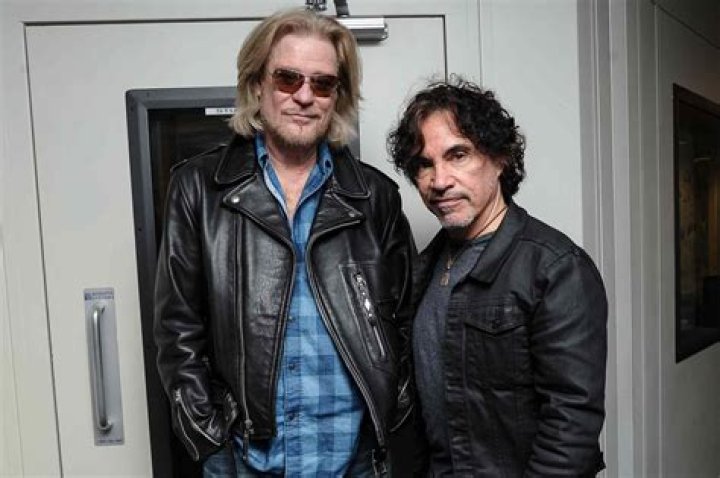
John Oates, a member of the renowned pop-rock group Hall & Oates, shares details about their current legal battle and artistic partnership.
A temporary restraining order has been issued amid a legal battle, preventing Whole Oats Enterprises’ assets from being sold to Primary Wave without first going through arbitration.
Even though they were formed in 1972 and had great success with songs like “Private Eyes” and “Maneater,” Hall & Oates are still going strong.
Recent events, however, point to a serious strain in their relationship. In November, Daryl Hall called their current state of affairs a “global divorce,” announcing the end of their lengthy artistic partnership.
The duo’s journey is further complicated by the legal complexities surrounding the asset sale, which makes it necessary to look more closely at the dynamics between the two musicians.
The story of Hall & Oates takes a new turn as the legal dispute plays out, provoking contemplation on the difficulties that can arise even after decades of artistic collaboration and the complexities of artistic partnerships.
The story of their musical legacy and how future generations view the duo’s journey may be shaped by the court cases.
What was the battle between John Oates and Daryl Hall?
Due to a brewing legal dispute, the long-standing collaboration between John Oates and Daryl Hall—the legendary team behind Hall & Oates—has recently come under scrutiny.
News of Daryl Hall obtaining a temporary restraining order against John Oates to stop him from selling his stake in Whole Oats Enterprises to Primary Wave Music signaled the start of the drama.
Their creative partnership is now in uncertain territory as a result of this legal maneuver.
When Daryl Hall, 77, filed a private lawsuit in Nashville against John Oates, 75, a legal dispute arose. Coinciding with Hall’s successful request for a restraining order, the legal proceedings became public, revealing a deeper division between the long-term musical partners.
Hall said in November that the proposed sale was a betrayal of established business agreements and that it was being done in secret and bad faith. Oates answered quickly, calling Hall’s remarks inflammatory, ludicrous, and untrue.
The situation becomes more complicated when it is revealed later that Hall wants to prevent Oates from selling his share to Primary Wave Music.
Notoriety for obtaining song catalogs from a variety of artists led to Primary Wave Music’s rise to prominence in the Hall & Oates story.
John Oates reflected on their heyday as celebrities and says that he has moved on from it.
Even though they broke number-one records and enjoyed international success, touring constantly took up time that could be spent reflecting.
Oates pointed out that, although many saw that period as the pinnacle of his life, it wasn’t always his favorite.
The fact that they acknowledged the challenges at the height of their collaboration highlights the complexities that can develop behind the scenes in a fruitful musical collaboration.
Consideration of the effect of legal battles on the legacy of legendary musical collaborations is prompted by the legal drama surrounding Hall & Oates.
The way things are going raises concerns about their relationship and the obstacles that may have brought them to this point.
It is up to fans, business observers, and legal specialists to guess at the possible results and how they might affect Hall & Oates going forward.