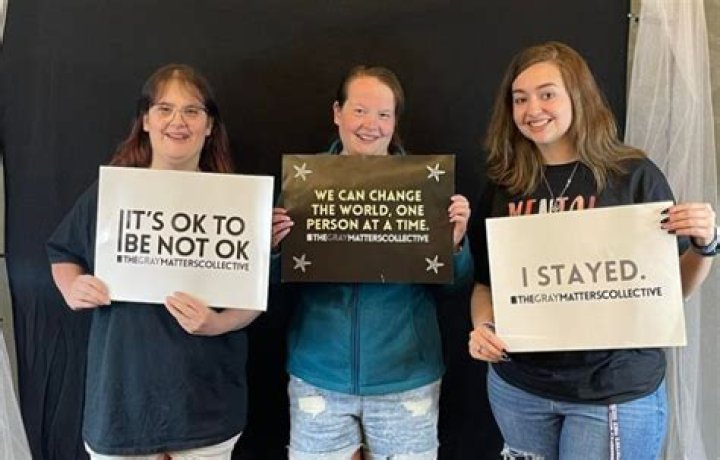
In the year after the nation saw an all-time record number of suicides, the QC Zero Suicide Initiative will host a Walk for Zero Suicide on Saturday, Sept. 9, 2023, at 10 a.m.
The walk will be along the I-74 Bridge pedestrian path (starting in Moline). QC Zero Suicide Initiative officially launched in February 2022, as a response of the Quad Cities Behavioral Health Coalition’s evaluation of a 2019 survey.
Participants are able to register for a two-mile challenge or support virtually by signing up for the Sleep-In for Zero Suicide. All participants can register on the event website HERE, and will receive a walk packet including a T-shirt, mental health resources, and additional goodies. September is Suicide Prevention Awareness Month.
QC Zero Suicide Initiative is a local effort of the Quad Cities Behavioral Health Coalition, which focuses on reaching the goal of no suicides in the QC community within three years. The area has averaged about 50 suicides a year in the past.
The Sept. 9 two-mile walk is a round trip on the bridge path and last year, just over 100 people participated, said Madi Krause, community specialist for the Zero Suicide Initiative (which is part of a national framework). They’re hoping to at least double the number of walkers, she said Wednesday.
For your $25 fee, participants will get an event T-shirt, some resources from local agencies as well as a booklet about suicide prevention and awareness.
Other related walks in the region during September will be:
- Sept. 9 at noon — West Central Illinois Out of the Darkness Walk, Lake Storey Park, Galesburg
- Sept. 16 at 9:30 a.m. — NAMI Walks Your Way, Bend XPO, East Moline
- Sept. 24 at 1 p.m. — Illinois QC Out of the Darkness Walk, Wharton Field House, Moline
- Sept. 30 at 2 p.m. — Iowa QC Out of the Darkness Walk, Garfield Park, Davenport
The Quad Cities Open Network (which coordinates the Behavioral Health Coalition) has raised $250,500 so far toward its $500,000 fundraising goal, Krause said. QCON is a collaboration among about 104 area agencies, across health and human services, as well as municipalities. It first formed in 2019.
The Sept. 9 walk doesn’t have a financial goal, but the aim is more “to more highlight those agencies in the Quad Cities that are working for mental health and suicide prevention and awareness, spread resources and agencies and get folks to those resources, as well as connect folks to training for suicide prevention and awareness,” Krause said.
One main goal is to get more local people trained in “question, persuade, and refer” (QPR), which is free to community members, organizations and businesses, she said. The goal for that is to have 1,000 people trained in QPR by 2025.
That online training (which takes about an hour) initially shows how to look for warning signs (to question) for people who may be “experiencing suicidal thoughts, suicidal tendencies, and then what to do once those things are identified,” Krause said. “The question part is asking the right questions, how to ask questions in a way that is appropriate for a person because a lot of people don’t know that they don’t have access to those resources.
“Then the persuade part is persuading them not to harm themselves, and then persuading them to possibly get help and what that looks like as an individual and then refer is being able to help that person get resources that are necessary,” she said. “A big part of us as an initiative is working with potential resources to ensure that community members are aware of them. Because that’s also a big issue is that people who don’t work in the mental health field may not know all the resources available.”
Record high suicides nationwide
After declining in 2019 and 2020, suicide deaths increased approximately 5% in the U.S. in 2021. Estimates released earlier this month by the Centers for Disease Control and Prevention (CDC) indicate that suicide deaths further jumped in 2022, rising from 48,183 in 2021 to an estimated 49,449 deaths in 2022, an increase of 2.6% and the highest ever.
“Nine in 10 Americans believe America is facing a mental health crisis. The new suicide death data reported by CDC illustrates why. One life lost to suicide is one too many. Yet, too many people still believe asking for help is a sign of weakness,” HHS Secretary Xavier Becerra said in a CDC release. “The Biden-Harris Administration is making unprecedented investments to transform how mental health is understood, accessed and treated as part of President Biden’s Unity Agenda. We must continue to eliminate the stigmatization of mental health and make care available to all Americans.”
“The troubling increase in suicides requires immediate action across our society to address the staggering loss of life from tragedies that are preventable,” said CDC’s Chief Medical Officer Debra Houry. “Everyone can play a role in efforts to save lives and reverse the rise in suicide deaths.”
“Today’s report underscores the depths of the devastating mental health crisis in America. Mental health has become the defining public health and societal challenge of our time. Far too many people and their families are suffering and feeling alone,” said U.S. Surgeon General Vivek Murthy.
“These numbers are a sobering reminder of how urgent it is that we further expand access to mental health care, address the root causes of mental health struggles, and recognize the importance of checking on and supporting one another,” he said. “If you or a loved one are in emotional distress or suicidal crisis, please know that your life matters and that you are not alone. The 988 Suicide and Crisis Lifeline is available 24/7 for anyone who needs help.”
The Iowa suicide rate in 2020 was 18.08 per 100,000 (17th highest in the nation), and 2nd-leading cause of death for ages 10-24, and the Illinois rate was 10.53 per 100,000, according to the American Foundation for Suicide Prevention.
A big challenge is making sure mental health agencies and counselors have the capacity to serve people in need.
“We see the struggle and the frustration with that is not having the capacity. And so we want to make sure that we understand that it’s a systematic issue and we have to work from that angle as well,” Krause said Wednesday. A big issue is also insurance courage for mental health, she noted.
“Another thing that we do at the Open Network is making sure that we are giving the right referrals, that we know the capacity and we’re following up with individuals to make sure if they don’t have an appointment right now, but what can we do at this exact moment to ensure that they are safe and well?” Krause said.
Removing the stigma
Many people who are hurting put on a happy face and it may be hard to see they’re having problems.
And that also means removing the stigma behind mental health,” she said. “A lot of times those people that are putting those masks up are putting them up, because of the stigma — because sometimes it’s not OK to not be OK. And that’s a stigma that we have to move in our community to let people know if you aren’t OK, please reach out to someone.”
“Suicide being preventable is not just a slogan, it is truly so many pieces that have to go into that,” Krause said.
The 988 Suicide & Crisis Lifeline (formerly known as the National Suicide Prevention Lifeline) offers 24/7 call, text and chat access to trained crisis counselors who can help people experiencing suicidal thoughts, substance use, and/or mental health crisis, or any other kind of emotional distress.
People can also dial 988 if they are worried about a loved one who may need crisis support.